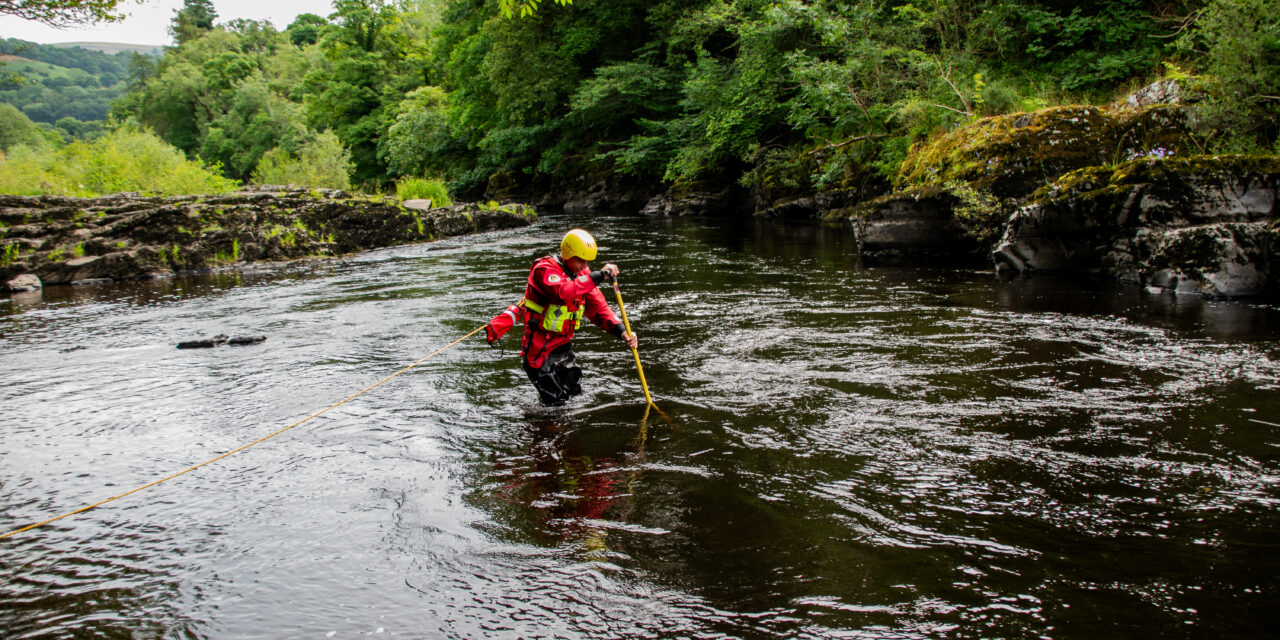
Selecting the right water safety course is crucial for ensuring workplace safety around water. Here’s a comparison of our key courses to help you make an informed decision based on your specific needs:
Safe Working In Water (SWIW) Course
Target Audience: Individuals needing to make planned entry into the water (not floods) to carry out their tasks.
Key Features:
- Objective: Provide individuals with the knowledge and techniques to safely enter water to perform their tasks, including implementing rescue plans.
- Skills Covered: Includes self and co-worker rescue using throw bags, wading techniques, and reach poles.
- Ideal for: Environment Agency, Scottish Environment Protection Agency, and Natural Resources Wales personnel, Surveyors, and Construction Workers.
Safe Working Near Water (SWNW) Course
Target Audience: Individuals who need to carry out tasks near water (not floods) but do not plan to make entry.
Key Features:
- Objective: Provide individuals with the knowledge and techniques to operate safely near water.
- Skills Covered: Includes hazard identification, accidental immersion and self-rescue.
- Ideal for: Environment Agency, Scottish Environment Protection Agency, and Natural Resources Wales personnel, Surveyors, and Construction Workers.
Water Awareness and Safety (WAS) Course
Target Audience: Individuals who need awareness of water hazards (not floods) but do not work near water.
Key Features:
- Objective: Classroom-based learning on inland and coastal water hazards.
- Content: Includes hazard awareness and safe systems of work.
- Ideal for: Office-based staff, supervisors, and workers who do not require PPE for water work.
Lifejacket Competent User (LJCU) Course
Target Audience: Individuals who are issued with lifejackets to work in close proximity to water.
Key Features:
- Objective: Provide individuals with the knowledge to use a lifejacket, including its care and maintenance.
- Skills Covered: Includes donning, doffing, and practical use in emergencies.
- Ideal for: Individuals familiar with basic water safety or who are not required to enter water intentionally.
Making the Right Choice
When choosing a course, consider the job requirements, necessary skills, and PPE needs. Each option is tailored to specific roles and responsibilities, ensuring compliance and safety in water-related environments.
For more details or to discuss your training needs, contact us today. Your safety matters.


